
Test Your Knowledge of the Pal Models of the Skeletal System and Joints
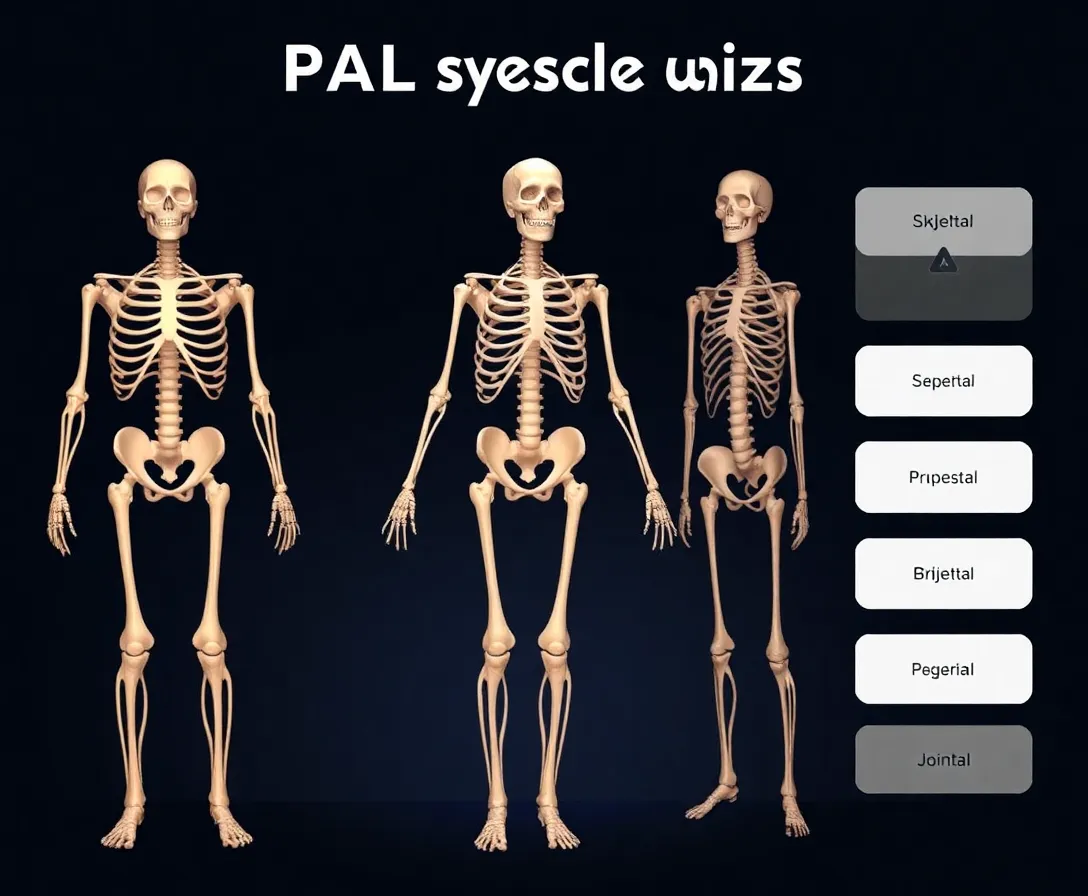
Take the quiz now

Join us in the "Test Your Knowledge on the Pal Models of the Skeletal System and Joints" quiz, designed to enrich your understanding of the groundbreaking PAL (Physical Activity and Learning) models. This interactive quiz invites you to explore the human skeletal system and joints through innovative teaching aids. Challenge yourself with thought-provoking multiple-choice questions that cover joint types, functions, and the pivotal role of physical activity in maintaining a healthy skeletal system. Whether you are a student, educator, or an anatomy enthusiast, this quiz provides a unique opportunity to enhance your knowledge and appreciation of the human body. Embark on this educational journey and see how PAL models transform the exploration of skeletal systems and joints!
Want to Discover Shapes of Life? Try Me.bot
Discover The Unexpected and Find Incredible Inspirations
Loved by Learners and Educators Alike
This quiz on the PAL models of the skeletal system and joints is fantastic! It truly enhances learning through interactive and thought-provoking questions. A must for any anatomy enthusiast.
As an educator, I find the PAL models quiz to be an invaluable tool. It effortlessly combines knowledge of joint types and functions with the role of physical activity, offering a comprehensive learning experience.
The 'Test Your Knowledge on the Pal Models' quiz is a great way to explore the human skeletal system. It highlights the importance of physical activity in maintaining bone health, making it perfect for my clients.
Frequently Asked Questions
What are the PAL models in the context of the skeletal system?
The PAL models, or Physical Activity and Learning models, are innovative educational tools designed to teach the complexities of the human skeletal system and joints, enhancing the learning experience with practical and visual engagement.
How does the quiz help in understanding the skeletal system?
The quiz provides thought-provoking multiple-choice questions that guide participants through the structure and function of the skeletal system and joints, promoting an in-depth understanding of these crucial aspects of human anatomy.
Why is physical activity emphasized in relation to the skeletal system?
Physical activity is emphasized because it plays a crucial role in maintaining the health and functionality of the human skeletal system, promoting bone strength and joint flexibility, which are focal points in our quiz.
Who can benefit from the PAL models skeletal system quiz?
Students, educators, and anyone with a curiosity for anatomy can benefit from the quiz, as it offers an engaging way to deepen their knowledge about the skeletal system and joints using PAL models.
What topics are covered in the quiz on PAL models of joints?
The quiz covers topics such as different types of joints, their specific functions, and how the innovative PAL models assist in understanding these concepts, all aimed to enhance your knowledge of the skeletal system.
RELATED QUIZZES


Your inspiring companion for life


PRODUCT
NEED HELP

