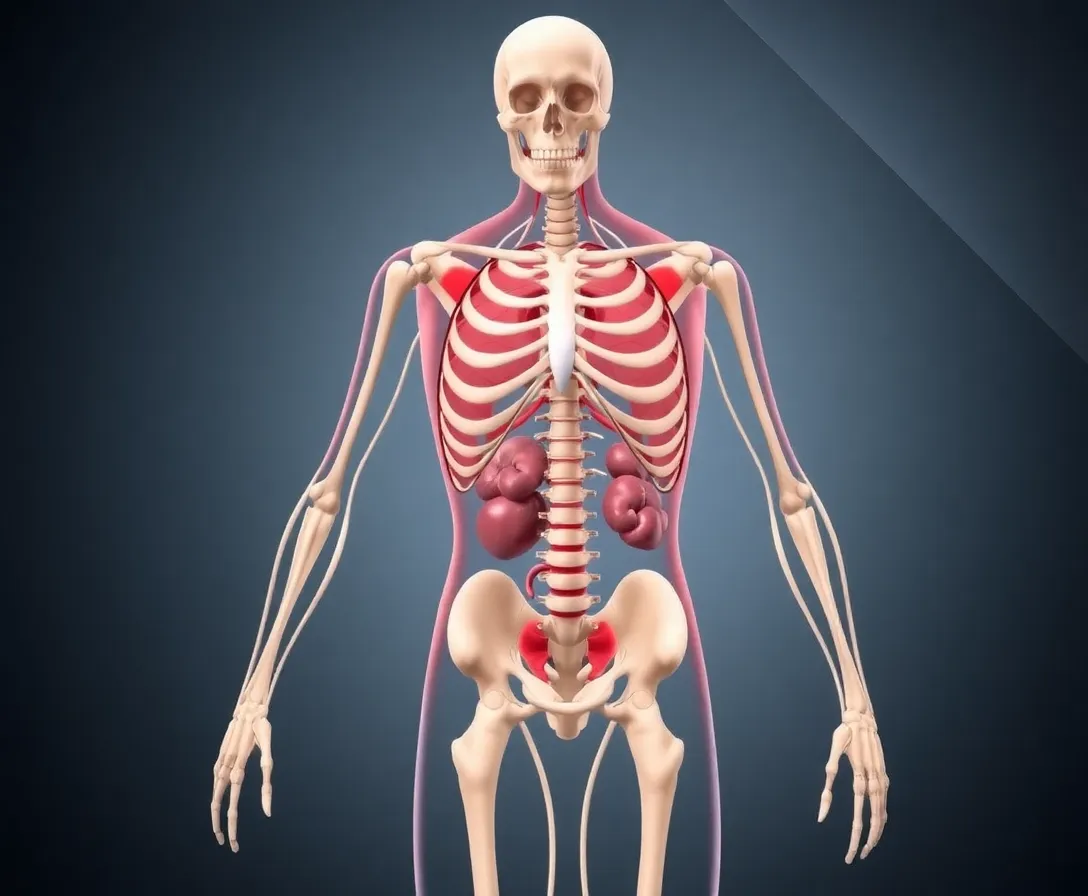
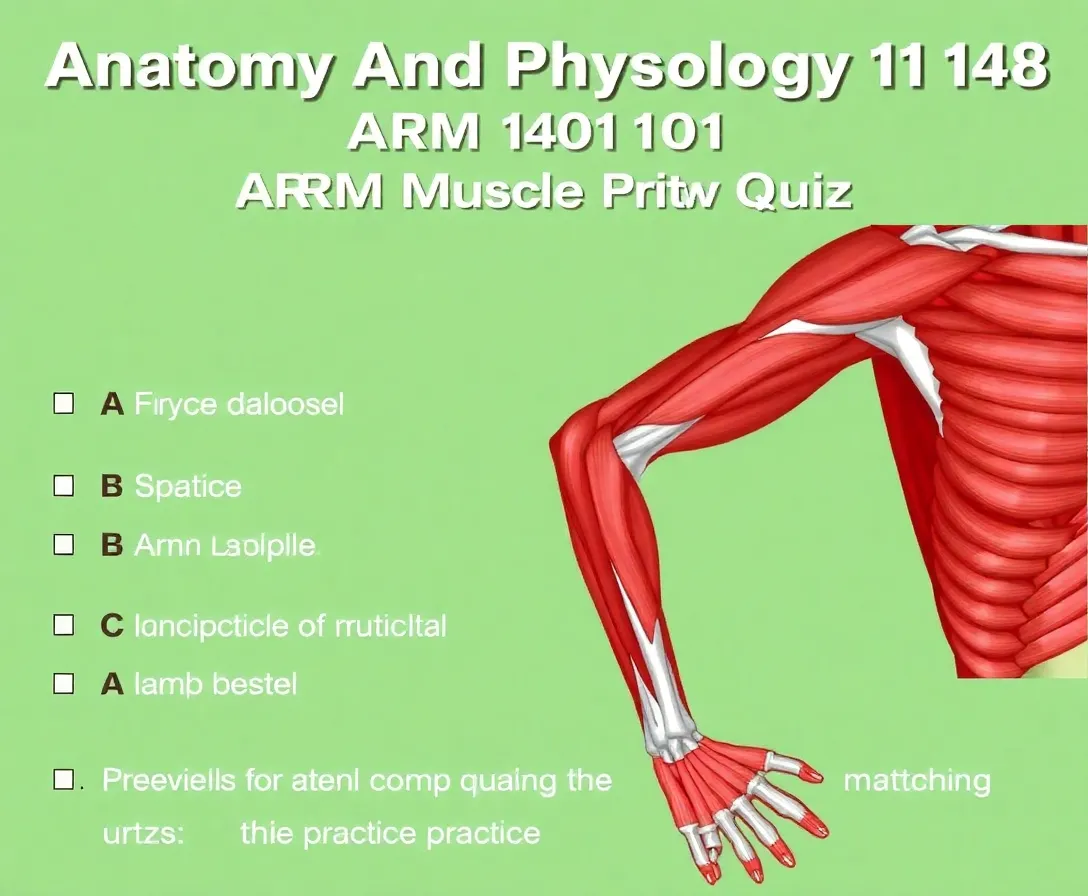
Step into the Anatomy & Physiology Quiz, crafted to test and enhance your understanding of the human body's intricate structures and functions. This quiz covers a wide range of systems and components, spanning the skeletal, muscular, respiratory, and circulatory systems. By delving into the complex relationships between anatomy and physiology, you will gain a deeper appreciation for the marvels of the human body. Are you prepared to embark on this enlightening journey through the fascinating realm of anatomy and physiology? Let's get started!
14. Which organ system provides support, protection of soft tissue, mineral storage, and blood formation?
Skeletal
Nervous
Integumentary
Muscular
15. Which organ system transports nutrients, metabolic wastes, gases, and defense cells?
Cardiovascular
Muscular
Digestive
Urinary
16. Which organ system functions in defense against infection and disease?
Lymphatic
Cardiovascular
Endocrine
Digestive
17. Directing long term changes in the activities of other organ systems is the major function of the ________ system.
Endocrine
Digestive
Lymphatic
Cardiovascular
18. Elimination of excess water, salts and waste products are functions of the ________ system.
Urinary
Digestive
Respiratory
Lymphatic
19. Which organ system removes carbon dioxide from the bloodstream?
Respiratory
Endocrine
Lymphatic
Cardiovascular
20. Gas exchange is to the respiratory system as absorption of nutrients is to the ________ system.
Digestive
Cardiovascular
Urinary
Lymphatic
21. Protection from environmental hazards is a function of the ________ system.
Integumentary
Muscular
Skeletal
Endocrine
22. In general, the nervous system does each of the following, except
Directs long-term responses to change.
Directs very specific responses.
Helps to maintain homeostasis.
Responds rapidly to change.
23. Regarding homeostatic mechanisms involved in temperature regulation, the smooth muscle in the walls of blood vessels supplying the skin act as (the):
Effectors
Control center
Integration center
Receptors
24. Which statement is true regarding the negative feedback homeostatic mechanism, which occurs during temperature regulation?
The skin acts like a radiator, losing heat to the environment.
Increased activity in the control center targets skeletal muscle in the extremities.
The only receptors for temperature exist in the skin.
At normal body temperature, the temperature control center is extremely active.
25. The maintenance of a constant internal environment in an organism is termed
Homeostasis
Negative feedback
Positive feedback
Integration
26. When body temperature rises, a center in the brain initiates physiological changes to decrease the body temperature. This is an example of
Negative feedback
Positive feedback
Nonhomeostatic regulation
Diagnostic regulation
27. The integrating center for the negative feedback loop that regulates body temperature is the
Brain
Temperature receptor
Positive feedback center
Skin
28. This type of feedback exaggerates the effects of variations from normal.
Positive
Negative
Neutral
Depressing
29. If a response decreases a disturbance, the system is classified as a ________ feedback system.
Negative
Polarized
Neutral
Positive
30. If a response increases a disturbance, the system is classified as a ________ feedback system.
Positive
Negative
Polarized
Deficit
31. An example of a receptor in a negative feedback loop controlling body temperature would be
Temperature sensors on the skin that detect a stimulus
Effectors that cause blood vessels to dilate
Sweat glands that act like effectors
Sweat glands that increase secretion
32. Which of the following structures is responsible for regulating the passage of materials between the blood and brain, forming a protective barrier known as the blood-brain barrier (BBB)?
Astrocytes
Microglia
Ependymal cells
Oligodendrocytes
33. Based on the description of the organs' relative locations, which organ would the surgeons see first if looking into the incision?
Bladder
Uterus
Cervix
Rectum
34. What other organ are the surgeons likely to find in the hypogastric region?
Small intestine
Liver
Heart
Stomach
35. Two monosaccharides are joined together by which process?
Dehydration synthesis
Catabolism
Exchange reaction
Hydrolysis
36. Which of the following is a product of the hydrolysis of sucrose?
Fructose
Lactose
Maltose
Glycogen
37. Which statement regarding disaccharides is true?
Disaccharides are very soluble in water.
Glycogen is a critically important disaccharide.
Disaccharides are not readily soluble in water.
Hydrolysis is the process whereby disaccharides are formed from monosaccharides.
38. The smallest stable units of matter are
Atoms
Protons
Electrons
Molecules
39. The 'atomic number' of an atom is determined by the number of ________ it has.
Protons
Protons + neutrons
Protons + electrons
Electrons
40. The mass number represents the number of
Protons + neutrons
Neutrons + electrons
Electrons in an ion
Protons in an atom
41. The 'atomic weight' of an atom reflects the average number of
Protons + neutrons
Electrons
Neutrons
Protons
42. Which element commonly has only a proton as its nucleus?
Hydrogen
Neon
Helium
Argon
43. The nucleus of an atom consists of
Protons + neutrons
Protons + electrons
Neutrons
Electrons
44. The center of an atom is called the ________.
nucleus
core
hub
base
45. Electrons whirl around the center of the atom at high speed, forming a(n) ________.
electron cloud
nucleus
proton shell
electro-field
46. The innermost electron shell in an atom holds up to ________ electrons.
2
4
6
8
47. The chemical behavior of an atom is determined by
The outermost electron shell
The number of protons
The size of the atom
The mass of the nucleus
48. Ions with a + charge are called
Cations
Positrons
Isotopes
Anions
49. Which of the following is not a cation?
Cl-
Na+
K+
Ca2+
50. Electrons in an atom occupy an orderly series of electron shells or ________.
energy levels
valence shells
atomic rings
orbitals
Advertisement
Want to Discover Shapes of Life? Try Me.bot
Discover The Unexpected and Find Incredible Inspirations
What topics are covered in the Anatomy & Physiology Quiz?
The Anatomy & Physiology Quiz covers a variety of topics, including the skeletal, muscular, respiratory, and circulatory systems, providing a comprehensive understanding of the human body.
Who is the Anatomy & Physiology Quiz designed for?
The Anatomy & Physiology Quiz is designed for anyone interested in learning more about the human body's structures and functions, from students to healthcare professionals.
How can the Anatomy & Physiology Quiz help me?
By taking the Anatomy & Physiology Quiz, you can test your knowledge, identify areas for improvement, and develop a deeper appreciation for the intricate workings of the human body.
What can I expect from the Anatomy & Physiology Quiz?
You can expect a variety of challenging questions that cover different systems and components of the human body, making the Anatomy & Physiology Quiz both informative and engaging.
Is the Anatomy & Physiology Quiz suitable for beginners?
Yes, the Anatomy & Physiology Quiz is suitable for beginners as well as those with a more advanced understanding, offering questions that cater to different levels of knowledge.