Cat ADHD Quiz: Is My Cat Hyperactive or Easily Distracted?

This educational quiz cannot diagnose ADHD, hyperactivity or any medical condition. Sudden, intense or concerning behavior changes should be discussed with a veterinarian.
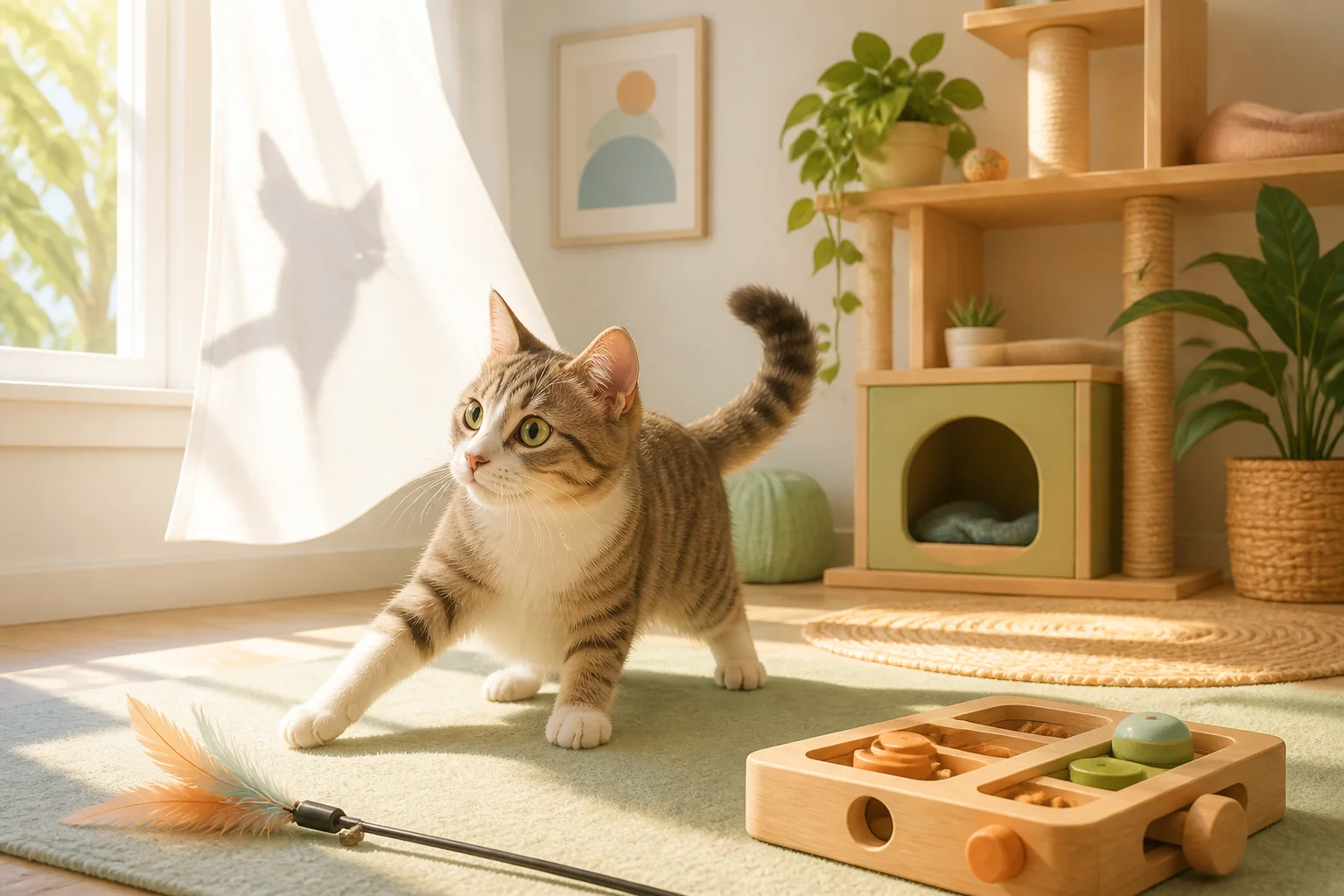
Cat ADHD Quiz: Is My Cat Hyperactive or Easily Distracted?
Take the quiz now
Go
Does your cat race from one activity to another, lose interest quickly or struggle to settle? Answer 10 observation-based questions about play, attention, rest and daily context. The result describes a behavior pattern you can monitor; it does not diagnose ADHD or another condition.

Cat Activity and Attention Pattern Quiz

1. After a focused interactive play session, how does your cat usually respond?

Grooms, eats or settles within a reasonable time
Looks for another short round of active play
Immediately switches to investigating something else
Keeps pacing or cannot become comfortable

2. How long does your cat stay engaged with a suitable food puzzle or toy?

Long enough to complete or meaningfully explore it
Longer after some energetic play
Briefly, before leaving and repeatedly returning
Cannot engage or becomes unusually frustrated

3. What happens when a small sound or movement appears during play?

Notices it and can return to the activity
Chases it as part of an energetic play burst
Changes focus immediately and forgets the first activity
Reacts intensely and stays unsettled

4. Which description best fits your cat's sleep and quiet time?

Has regular, restful periods throughout the day
Sleeps well after enough play and enrichment
Wakes often to investigate ordinary activity
Sleep seems unusually limited or disrupted

5. How predictable are your cat's high-energy periods?

They usually occur at familiar times such as dawn or evening
They increase when play opportunities have been limited
They happen whenever something new catches attention
They are frequent, intense or becoming harder to manage

6. In a calm room with little happening, what does your cat usually do?

Rests, watches quietly or chooses a calm activity
Invites play before eventually settling
Moves between windows, objects and rooms searching for novelty
Paces, vocalizes or seems unable to relax

7. How does your cat respond to a familiar cue or reward-based training game?

Usually follows it for a short session
Responds best after an energetic play outlet
Understands it but is quickly pulled toward other stimuli
Cannot participate even in a quiet, familiar setting

8. How often does your cat knock over or climb onto things during active moments?

Occasionally, within normal exploration
Mostly when needing more appropriate climbing or play outlets
Often while rapidly switching from one target to another
So frequently that safety or daily routines are affected

9. Have activity or attention patterns changed recently?

No, the pattern is stable and manageable
It mainly varies with play and routine
It has become noticeable in more situations
Yes, it changed suddenly or is getting worse

10. How much does the behavior affect your cat or household?

Very little; ordinary routines work well
Small enrichment changes usually help
Play and routines require frequent redirection
It disrupts sleep, eating, safety or normal daily activities

What this cat activity quiz observes

The questions look at repeated patterns: whether your cat can settle after play, stay engaged with an appropriate activity, rest normally and recover after everyday stimulation. Age, temperament, health, routine and the home environment can all affect these behaviors.

Answer from what you have seen across several weeks. Normal zoomies, kitten energy or one unusually exciting day should not define the result.

When to ask a veterinarian

ADHD is not something an online quiz can diagnose in a cat. Pain, thyroid disease, anxiety, sleep disruption, medication effects and unmet play or enrichment needs can sometimes look like restlessness or poor focus.

Contact a veterinarian if the behavior appeared suddenly, is intensifying, affects eating or sleep, causes injury or makes ordinary routines difficult. Notes about timing, triggers, duration, play and rest can make that conversation more useful.
Explore All Quiz