The Ultimate Biology Test: Cell Biology Quiz

The Ultimate Biology Test: Cell Biology Quiz
Take the quiz now
Go
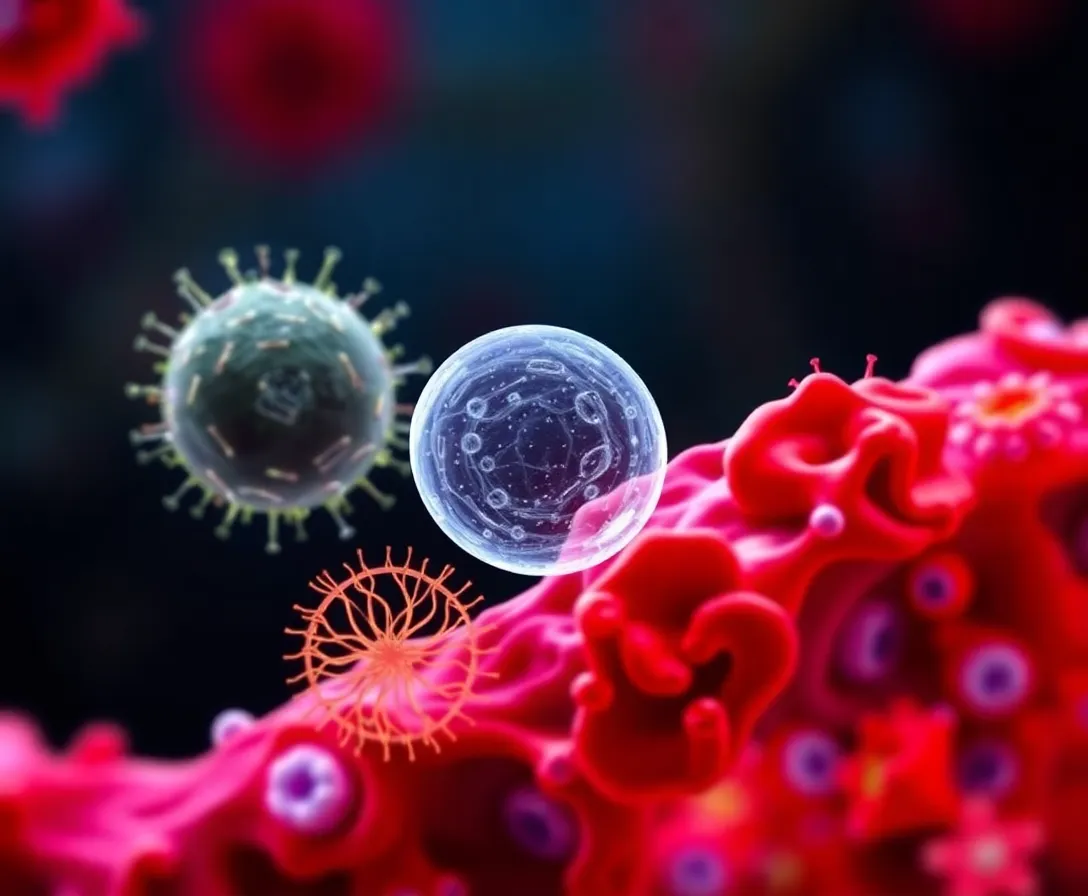
Are you a biology student? Test your knowledge on cells and tissues with this rigorous cell biology quiz. As the fundamental unit of all life forms, understanding cells is crucial. This comprehensive biology test will push your knowledge to its limits, covering intricate topics such as cell anatomy, organelles, cellular transport, metabolism, and cell division. Dive into core concepts like cell membrane structure, DNA replication, protein synthesis, and cellular respiration. This quiz is an excellent opportunity to enhance your grasp of core biological principles and appreciate the intricate details of cellular life. Are you ready to explore the microscopic world of cells? Good luck, and challenge yourself to score the highest!

Character Test

1. What structure is present in all cells?

Plasma membrane
Cell wall
Nucleus
Mitochondria

2. Which organelle serves as the control center of the cell?

Nucleus
Mitochondrion
Cell membrane
Endoplasmic reticulum

3. Which of these is absent in plant cells?

Centrioles
Nucleus
Chloroplast
Cell wall

4. What makes the rough ER 'rough'?

Ribosomes
Golgi apparatus
Nucleolus
Chromosomes

5. Identify the thin, flexible barrier surrounding the cell.

Plasma membrane
Cell wall
Nuclear envelope
Cytoplasm

6. What is the primary function of the cell wall?

Support and protect the cell
Store DNA
Help the cell move
Direct cellular activities

7. What is the main role of the cytoskeleton?

Maintain cell shape
Contains DNA
Surrounds the cell
Help make proteins

8. Prokaryotes lack which of the following?

A nucleus
DNA
A cell membrane
Cytoplasm

9. Which organelle is absent in animal cells?

Chloroplast
Mitochondria
Ribosome
Smooth ER

10. Define diffusion.

Particles moving from high to low concentration.
Particles moving from low to high concentration.
Particles moving in equilibrium.
All of the above

11. What do eukaryotic cells possess?

Membrane bound organelles
Only ribosomes
DNA floating in cytoplasm
Just cytoplasm

12. What is the term for the diffusion of water?

Osmosis
Active transport
Facilitated diffusion
Exocytosis

13. Which organelle acts as the packing center for the cell?

Golgi apparatus
Nucleus
Lysosome
Endoplasmic reticulum

14. Which structure stores water within the cell?

Vacuole
Nucleus
Endoplasmic reticulum
Golgi apparatus

15. Which organelle is known as the powerhouse of the cell?

Mitochondria
Chloroplast
Endoplasmic reticulum
Vacuole

16. Who is credited with discovering and naming 'cells'?

Robert Hooke
Anton Van Leeuwenhoek
Lynn Margulis
Rudolph Virchow

17. Which of these is not found in all cells?

Vacuoles
Genetic material
Cell membrane
Cytoplasm

18. Where does protein synthesis occur?

Ribosomes
Nucleus
Lysosomes
Cell membrane

19. Which statement is not a part of cell theory?

All cells contain the same organelles.
All living things are made of cells.
Cells come from existing cells.
Cells are the basic units of structure and function.

20. Who proposed that some organelles were once free-living bacteria?

Lynn Margulis
Matthias Schleiden
Theodor Schwann
Antonie van Leeuwenhoek

21. What creates ribosomes in the nucleus?

Nucleolus
Rough ER
Smooth ER
Chromatin

22. What jelly-like substance is found in all cells?

Cytoplasm
Cytoskeleton
Chromosomes
Centrioles

23. What are the folds inside mitochondria called?

Cristae
Cilia
Chromosomes
Cytoskeleton

24. Which structure contains digestive enzymes?

Lysosome
ER
Vacuole
Vesicle

25. Which structure has ribosomes attached and processes proteins?

Rough ER
Smooth ER
Nucleus
Golgi apparatus

26. What is the opposite of diffusion?

Active transport
Osmosis
Facilitated diffusion
Diffusion

27. Which process involves the plasma membrane forming a pouch to ingest something?

Endocytosis
Osmosis
Exocytosis
Facilitated diffusion

28. Which process releases contents outside of the cell via a vesicle fusing with the plasma membrane?

Exocytosis
Pinocytosis
Endocytosis
Phagocytosis

29. Which organic compounds in the plasma membrane form channels or pumps?

Proteins
Carbohydrates
Nucleic acids
Lipids

30. Which of these is not supporting evidence for the endosymbiont theory?

Mitochondria and chloroplasts are only found in eukaryotic cells.
Mitochondria and chloroplasts have their own DNA.
Mitochondria and chloroplasts may reproduce.
Mitochondria and chloroplasts contain ribosomes.

31. What is untrue about the fluid mosaic model?

Cholesterol damages the plasma membrane.
Proteins float among phospholipids.
Carbohydrate chains may extend off the plasma membrane.
Phospholipids may move around.

32. What describes a cell with equal solute concentration as its environment?

Isotonic
Hypotonic
Hypertonic
Osmotic

33. Which is not found in all cells?

Lysosome
DNA
Plasma membrane
Cytoplasm

34. Where does photosynthesis occur?

Chloroplast
Smooth ER
Mitochondria
Cytoplasm

35. Who discovered that all animals are made of cells?

Theodor Schwann
Rudolf Virchow
Matthias Schleiden
Antonie van Leeuwenhoek

36. What helps cells maintain homeostasis?

Plasma membrane
Cell wall
Nucleus
Cytoskeleton

37. Which contains instructions for making proteins?

Nucleus
Golgi apparatus
Rough ER
Ribosome

38. Which is on the outermost part of a plant cell?

Cell wall
Plasma membrane
Centrioles
Vacuole

39. Which is not found in animal cells?

Cell wall
Nucleus
Mitochondria
Cytoplasm

40. Which of these was not visible under early microscopes?

DNA strands
Chloroplasts
Nucleus
Cytoplasm
Want to Discover Shapes of Life? Try Me.bot
Discover The Unexpected and Find Incredible Inspirations

Frequently Asked Questions

What is 'The Ultimate Biology Test: Cell Biology Quiz'?
'The Ultimate Biology Test: Cell Biology Quiz' is a challenging examination designed to assess your understanding of key cell biology concepts including cell anatomy, metabolism, and cellular processes.
Who should take 'The Ultimate Biology Test: Cell Biology Quiz'?
'The Ultimate Biology Test: Cell Biology Quiz' is ideal for biology students and enthusiasts who want to test and expand their knowledge of cellular structures and processes.
What topics are covered in 'The Ultimate Biology Test: Cell Biology Quiz'?
'The Ultimate Biology Test: Cell Biology Quiz' covers a broad range of topics such as cell anatomy, organelles, cellular transport, metabolism, cell division, DNA replication, protein synthesis, and cellular respiration.
How does 'The Ultimate Biology Test: Cell Biology Quiz' help improve biological knowledge?
'The Ultimate Biology Test: Cell Biology Quiz' helps enhance your understanding by challenging you with questions on core biological principles, which deepens your appreciation for the complexity of cellular life.
What makes 'The Ultimate Biology Test: Cell Biology Quiz' different from other biology quizzes?
'The Ultimate Biology Test: Cell Biology Quiz' stands out due to its comprehensive coverage of fundamental and advanced cell biology topics, and its focus on testing your knowledge to the extremes.
Explore All Quiz