The Axial Skeleton Test (Chap.7 The Skeleton)

The Axial Skeleton Test (Chap.7 The Skeleton)
Take the quiz now
Go
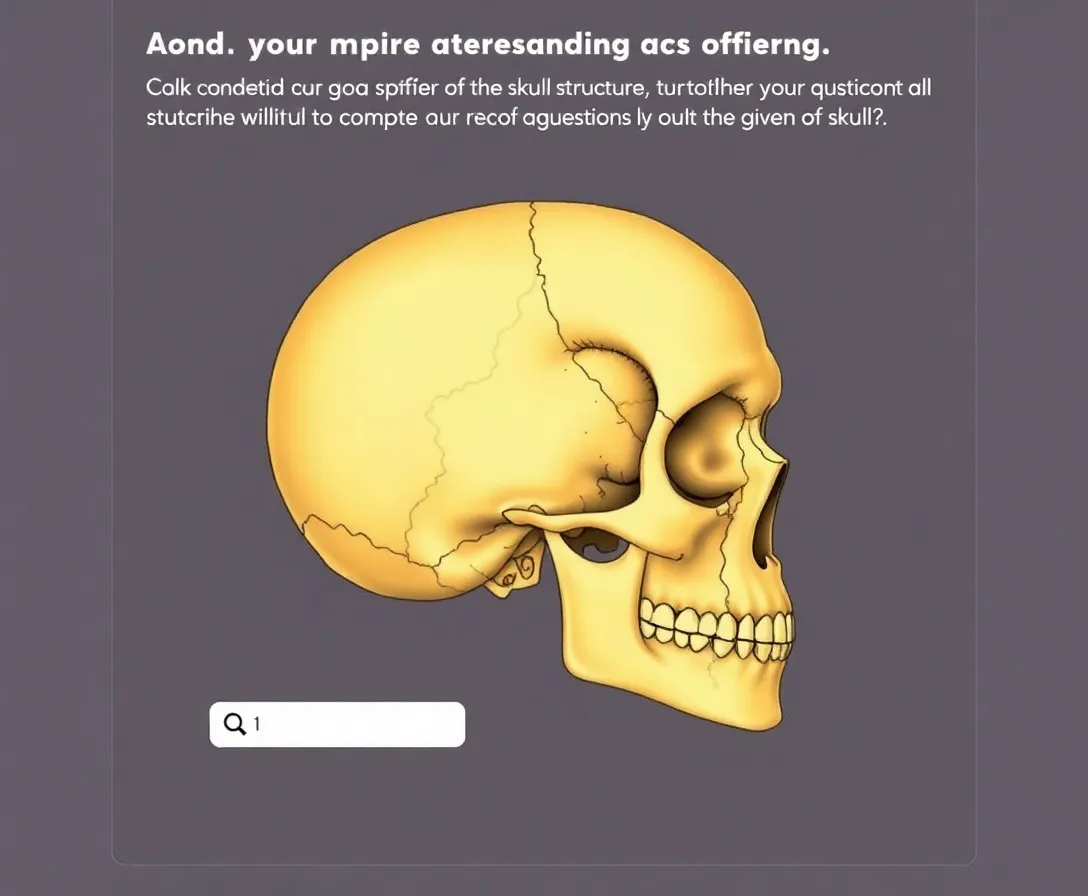
This assessment will evaluate your comprehension of the skull and its components. Make sure to read all the questions carefully and complete them within the allotted time.

Character Test

1. This bone makes up the lower part of the nasal divide:

A. ethmoid
B. zygomatic
C. vomer
D. nasal concha

2. Which bone mostly forms the 'cheek' area of the face?

A. zygomatic
B. facial
C. maxilla
D. temporal

3. The bulging bone structure behind your ear is known as:

A. occipital condyle
B. mastoid process
C. mandibular condyle
D. occipital bump

4. Cranium is built up of how many bones in total?

A. 6
B. 8
C. 12
D. 10

5. The pathway linking the nasal cavity and eye socket is called:

A. optic canal
B. inferior orbital fissure
C. lacrimal duct
D. infraorbital foramen

6. The single bone situated between the eyes forming the nasal ceiling is the:

A. sphenoid
B. vomer
C. nasal
D. ethmoid

7. The suture separating the occipital and parietal bones is the:

A. lambdoid
B. coronal
C. saggital
D. squamous

8. Which facial bone articulates with all but the mandible?

A. maxilla
B. vomer
C. zygomatic
D. palatine

9. Which bone does not help in orbit formation?

A. vomer
B. parietal
C. sphenoid
D. zygomatic

10. Match the structure incorrectly to its bone:

A. stylomastoid foramen :: occipital
B. pterygoid process :: sphenoid
C. jugular notch :: sternum
D. coronoid process :: mandible

11. Count of bones making up the skull, excluding middle ear bones, is:

A. 22
B. 26
C. 24
D. 32

12. Palatine bones function as:

A. roof of the mouth
B. floor of the nose
C. sides of the eye socket
D. back of the head

13. The maxilla bones play roles except:

A. forming the upper jaw
B. anchoring teeth
C. forming the nose tip
D. articulating with mandible

14. Identifying the lambdoid suture location:

A. between parietal and occipital bones
B. between frontal and parietal bones
C. between nasal and maxilla bones
D. between zygomatic and maxilla bones

15. The roles bones have include:

A. supporting body structure
B. creating joints
C. containing nerves
D. producing energy

16. Which bone assists in brain protection?

A. Calcium core
B. Cranium
C. Mandible
D. Maxilla

17. In addition to the brain, what else does the skull shield?

A. Lung tissue
B. Sensory organs
C. Digestive tract
D. Muscle tissue

18. Axial skeleton comprises how many bones?

A. 80
B. 60
C. 100
D. 54

19. What is not a primary region of the axial skeleton?

A. shoulder girdle
B. skull
C. vertebral column
D. thoracic cage

20. The mandible's main role is to secure the:

A. eyes
B. teeth
C. nose
D. cheek

21. What bone doesn't form part of the skull?

A. scapula
B. nasal
C. ethmoid
D. frontal

22. The orbits house the:

A. brain
B. eyeballs
C. tongue
D. nose

23. Which is not considered a facial bone?

A. humerus
B. nasal
C. palatine
D. maxilla

24. In the sphenoid are paired:

A. sinus cavities
B. pterygoid processes
C. stapes bones
D. maxillary bones

25. Which does the middle cranial fossa support?

A. frontal lobes
B. auditory nerves
C. brainstem
D. temporal lobes

26. Within the petrous is:

A. the inner ear
B. the nostril
C. the orbit
D. the jaw joint
Want to Discover Shapes of Life? Try Me.bot
Discover The Unexpected and Find Incredible Inspirations
Loved by Anatomy Enthusiasts
The Axial Skeleton Test was incredibly helpful for understanding the skull and its components. It truly boosted my confidence in the topic covered in Chapter 7 of The Skeleton.
An excellent assessment tool that challenges students’ comprehension of the axial skeleton. This quiz is a great addition for anyone looking to master the intricacies of the skull.
I found the Axial Skeleton Quiz to be very informative and enlightening. It reinforced my understanding and made learning about the skeleton components engaging and fun!

Frequently Asked Questions

What topics are covered in The Axial Skeleton Test (Chap.7 The Skeleton)?
The Axial Skeleton Test (Chap.7 The Skeleton) covers the structure and components of the skull, evaluating your understanding of its anatomy.
How should I prepare for The Axial Skeleton Test (Chap.7 The Skeleton)?
To prepare for The Axial Skeleton Test (Chap.7 The Skeleton), study the anatomy of the skull, including detailed information about its various parts and their functions.
What is the main focus of The Axial Skeleton Test (Chap.7 The Skeleton)?
The main focus of The Axial Skeleton Test (Chap.7 The Skeleton) is to assess your knowledge of the skull's anatomy and its distinct components.
How much time do I have to complete The Axial Skeleton Test (Chap.7 The Skeleton)?
The time allotted for completing The Axial Skeleton Test (Chap.7 The Skeleton) is specified within the instructions, ensuring you manage your time effectively to answer all questions.
Why is understanding the skull important for The Axial Skeleton Test (Chap.7 The Skeleton)?
Understanding the skull is crucial for The Axial Skeleton Test (Chap.7 The Skeleton) as it forms the basis of your comprehension of cranial anatomy and its significance in the skeletal system.
Explore All Quiz