CST Practice Exam Test

CST Practice Exam Test
Take the quiz now
Go
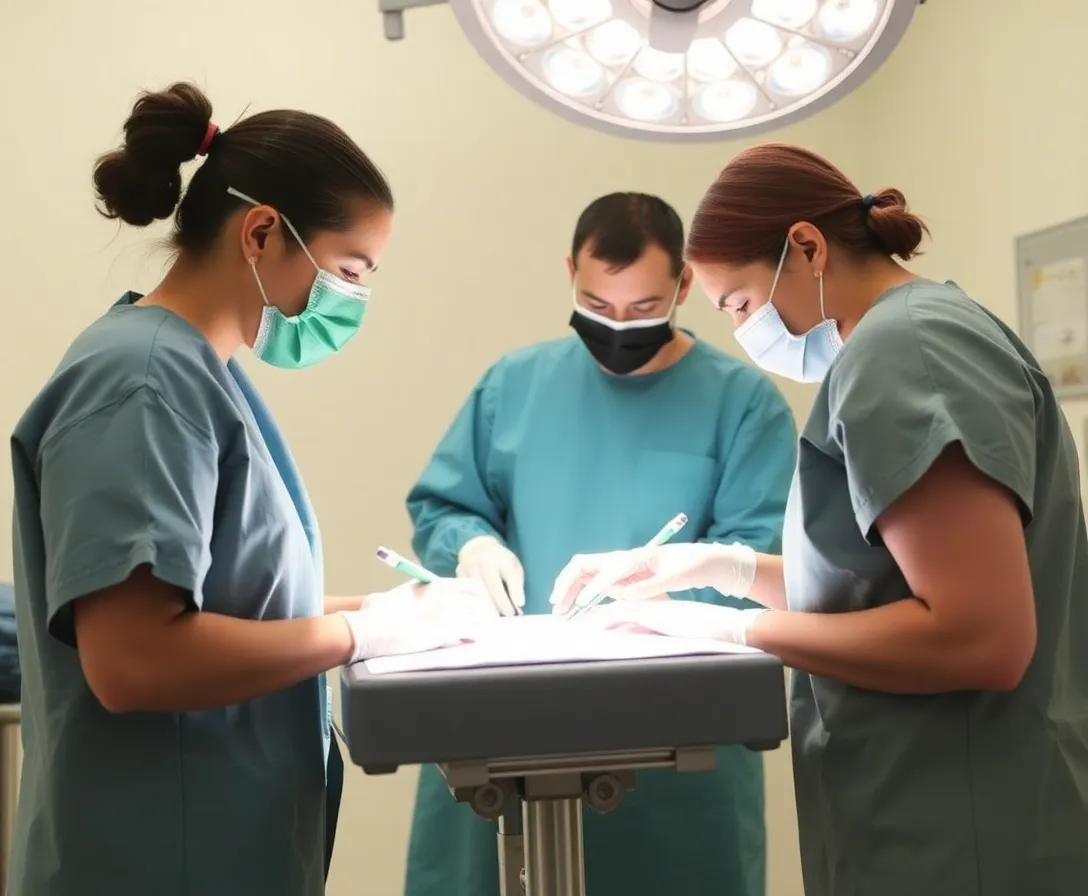
Are you getting ready for a career as a surgical technologist? Take on our CST Practice Exam Test to evaluate your readiness. A certified surgical technologist plays a vital role in assisting surgeons and other medical professionals in the operating room and preparing patients for surgery. To become certified, you must pass the CST exam. Try this quiz to gauge your preparation for the finals. Good luck!

Character Test

1. What is the best shielding against gamma rays?

Lead
Tin
Steel
Rubber

2. An appropriate placement area for the electrosurgical ground pad for a patient in lithotomy position is:

Upper arm
Upper buttock
Anterior thigh
Posterior shoulder

3. What is the optimal position for breast surgery?

Dorsal Recumbent
Prone
Lateral
Lithotomy

4. When transitioning an anesthetized patient from lithotomy to supine, the legs should be lowered slowly to prevent:

Circulatory depression
Hypertension
Laryngospasm
Respiratory issues

5. Hair removed during preparation for cranial surgery should be:

Saved as personal property
Discarded
Sent to pathology
Saved for possible transplant

6. The lower leg of a patient in lateral position for kidney surgery should be:

Flexed
Extended
Abducted
Externally Rotated

7. Which item is required when setting up for a D&C?

Stirrups
Cell-saver unit
Cassette holder
Electrosurgery unit

8. The usual position chosen for hemorrhoidectomy is:

Jack-knife
Lateral
Supine
Knee-chest

9. The preferred position for a TURP procedure is:

Lithotomy
Sims
Lateral
Supine

10. A normal adult white blood cell count is:

5000 to 9000
1000 to 2000
12000 to 15000
20000 to 25000

11. The most common straight catheter used prior to laparoscopic gynecologic surgery is:

Robinson
Pezzer
Malecot
Foley

12. For an ORIF of the humerus, which area of the body is prepped?

Arm, fingers to shoulder
Arm, foot to shoulder
Leg, foot to hip
Arm, fingers to elbow

13. An item that may be used in positioning a patient for a total hip replacement is:

Beanbag
Stirrups
Wilson frame
Andrews frame

14. Instruments that touch the appendix during an appendectomy should be:

Placed in a separate basin
Wiped with a saline sponge
Returned to the Mayo stand
Wiped with an alcohol sponge

15. Which procedure uses a microscope?

Stapedectomy
Tracheostomy
Radical neck
Tonsillectomy

16. For which procedure might a tourniquet be used?

Patellectomy
ORIF hip
Arthroscopy of shoulder
Femoral, popliteal bypass

17. Bleeding during a TURP is controlled by:

Cauterization
Gelfoam
Irrigation
Suture ligature

18. Bellucci scissors are used in which specialty?

Otorhinolaryngology
Gynecology
General
Plastic and Reconstructive

19. In strabismus surgery, what is the first tissue layer that must be incised?

Conjunctiva
Iris
Cornea
Scelera

20. What suturing technique involves short lateral stitches beneath the skin’s epithelial layer?

Subcuticular
Purse-string
Traction
Mattress

21. For embolectomies, which catheter is used?

Fogarty
Foley
Malecot
Angiocath

22. In a TURP setup, which instrument should be included?

Resectoscope
Lithotrite
Urethrotome
Gaylor biopsy forceps

23. Which instrument has teeth?

Allis
Mixter
Babcock
Mosquito

24. The active electrode on an electrosurgical unit is:

Pencil
Wall plug
Grounding pad
Voltage intensity dial

25. In a cholecystectomy, which anatomical structure must always be preserved?

Cystic duct
Cystic vein
Common duct
Cystic artery

26. Kelly clamps are primarily used for:

Hemostasis
Grasping
Crushing
Exposure

27. To prevent a loop colostomy from sliding back, it may be supported with:

Plastic or glass rod
Stone clamp
Adaptic gauze
Montgomery strap

28. For a cranial aneurysm preparation, which equipment is most likely used?

Microscope
Cryoprobe
Jordan Day drill
Crutchfield tongs

29. A resectoscope is used to resect the:

Prostate
Ovaries
Vas deferens
Fallopian tubes

30. The most accurate method to check autoclave effectiveness is:

Biological controls
Heat indicators
Swab culture tests
Heat-sensitive tape

31. What destroys vegetative organisms and spores?

Sterilizing agent
Germicide
Antiseptic
Bacteriostatic agent

32. Which solution is used for disinfecting endoscopic instruments?

Activated glutaraldehyde
Iodophors
Ethyl alcohol 70%
Phenolic compounds

33. Which is the most resistant to sterilization processes?

Spore
Virus
Spirochete
Tubercle bacillus

34. One factor affecting ethylene oxide sterilization is:

Humidity
Indirect contact
Gravity displacement
Saturated steam

35. An antiseptic would be used on:

Skin surface
Anesthesia masks
Intravenous tubing
Operating room table

36. Which connective tissue type fastens muscle to bone?

Tendon
Ligament
Cartilage
Areolar

37. A fluid-filled sac that prevents friction in a joint is called a:

Bursa
Tendon
Ganglion
Ligament

38. Cancer cells typically migrate through which system?

Lymphatic
Skeletal
Endocrine
Respiratory

39. The parathyroid gland regulates:

Calcium
Protein
Sodium
Bicarbonate

40. Aerobic organisms are best described as:

Oxygen-requiring
Pathogenic
Non-pathogenic
Non-oxygen-requiring

41. Upon an aseptic technique break, the scrub should:

Notify the person who broke the technique and correct the problem.
Notify the circulator and leave the decision to him/her.
Notify the OR supervisor and leave the decision to him/her.
Say nothing

42. An inanimate object that transmits a disease is a:

Fomite
Vector
Carrier
Arthropod

43. When two sterile individuals pass each other in the sterile field, they should:

Pass back-to-back
Both face the wall
Pass side-to-side
Both face the sterile field.

44. The local tissue reaction to injury is:

Inflammation
Fever
Infection
Immune reaction

45. Bacteria of the genus Clostridium are:

Anaerobic
Aerobic
Coagulase-negative
Nonspore-forming

46. Cleaning the OR prior to the first procedure should:

Include flat surfaces of tables and equipment.
Be done with a dry towel.
Be done with an antiseptic.
Concentrate on anesthetic equipment.

47. Sodium bicarbonate treats:

Acidosis
Alkalosis
Hypotension
Hypertension

48. In an emergency, which drug may raise a patient’s blood pressure?

Epinephrine (Adrenalin)
Morphine sulfate
Procaine (Novocaine)
Succinylcholine (Anectine)
Want to Discover Shapes of Life? Try Me.bot
Discover The Unexpected and Find Incredible Inspirations

Frequently Asked Questions

What is the CST Practice Exam Test?
The CST Practice Exam Test is a preparatory quiz designed to help aspiring surgical technologists evaluate their readiness for the CST certification exam.
Why is the CST Practice Exam Test important?
The CST Practice Exam Test is crucial because it allows candidates to assess their knowledge and preparedness for the actual CST certification exam, increasing their chances of passing.
How can I benefit from taking the CST Practice Exam Test?
By taking the CST Practice Exam Test, you can identify areas where you need to improve, build confidence, and enhance your exam-taking skills, ensuring better performance on the final test.
What topics are covered in the CST Practice Exam Test?
The CST Practice Exam Test covers a range of topics, including the roles and responsibilities of a surgical technologist, operating room procedures, and patient preparation for surgery.
Is the CST Practice Exam Test aligned with the actual CST certification exam?
Yes, the CST Practice Exam Test is designed to closely mimic the structure and content of the actual CST certification exam, providing a realistic preparation experience.
Explore All Quiz